Works
Contact

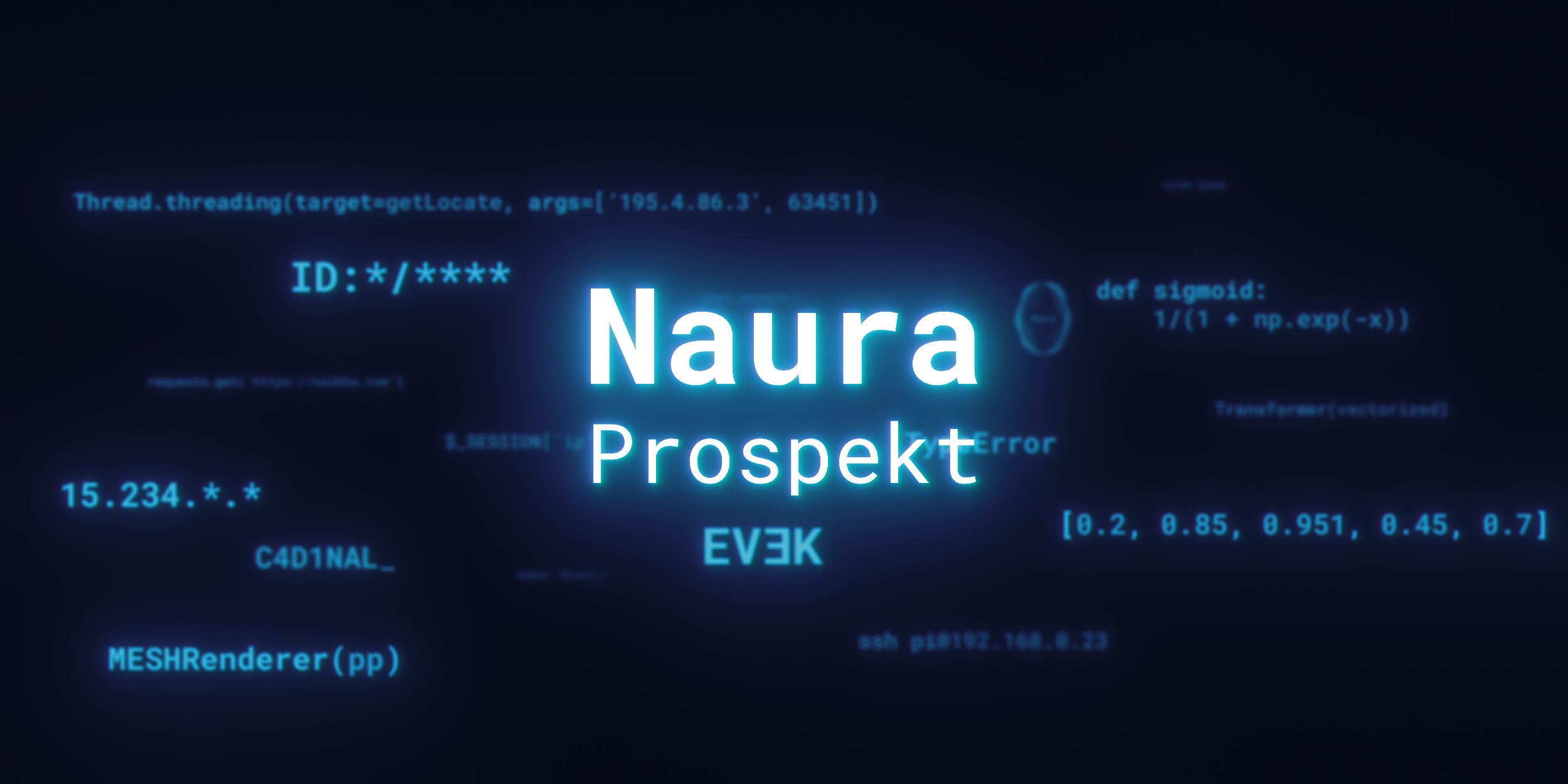
Naura Prospekt

A personal AI workspace and long-term operating environment I have been building for around six years, originally inspired by the idea of creating my own Jarvis, and progressively evolved into a full platform combining conversational AI, structured notes, real-time voice input, tools, settings, and productivity systems.

Date: 4/2021

Tags: Next.js, TypeScript, Express.js, OpenAI, Python

Hero image: https://naikho.com/api/media/portfolio/340473d3-99de-40df-b754-2fd0c8f6257a.png

Project content

## A long-term personal system

Naura Prospekt is not just a side project, it is the product I have been shaping for years to build the kind of environment I personally wanted to use every day.

It started as a very simple ambition: creating my own intelligent assistant, something inspired by the idea of a personal Jarvis. Over time, that initial concept evolved into something much broader, a full AI-powered workspace designed to centralize conversation, notes, tools, system settings, and eventually project and credential management.

What makes this project special to me is that it has grown alongside my own journey as a developer. Every major phase of my learning, from Python scripting to full-stack web architecture, from real-time systems to interface design, has been reflected inside Naura Prospekt.

## Where it started

Before development really became a passion, programming felt both fascinating and intimidating to me. I was interested in what software could do, but it still felt too complex to fully commit to.

A major turning point came through a Python course, where I slowly built enough confidence to keep going, even if the learning process was difficult at first. I had long periods of stopping and restarting, but one part of that course changed everything for me: networking.

When I reached the sections about sockets, DNS, and low-level communication, I finally found the part of programming that truly clicked for me. I spent time reading documentation, understanding how these systems worked, and even adapting older learning material written for `Python 2` into `Python 3`.

That was the moment where programming stopped feeling abstract and started feeling exciting.

## The first idea

Around `2020`, I started seriously thinking about building my own assistant.

At first, the concept was very simple:
- voice detection
- text-to-speech
- keyword-based command triggering
- opening applications or games
- basic desktop automation

This early version was not yet powered by modern generative AI. It was more of a command-based assistant, built from the desire to create a personal intelligent environment.

The original assistant was called `Naura`, and the larger ecosystem that started forming around it eventually became `Naura Prospekt`.

## The turning point, discovering generative AI

Later, I discovered early uses of generative AI through online technical content, which led me to experiment with OpenAI models.

This was the moment where the vision changed completely.

Instead of building only a command-based assistant, I realized I could combine:
- my growing interest in AI
- my web development skills
- my original assistant idea

That combination led to the first real conversational version of Naura Prospekt, an AI chatbot interface I began building before this type of product became mainstream.

The earliest versions were still rough:
- built in `React`
- written in plain `JavaScript`
- visually ambitious but technically imperfect
- heavily inspired by futuristic UI ideas
- difficult to maintain over time

Still, they established the product direction.

## From assistant to full workspace

As I kept learning and working on client projects, Naura Prospekt became my personal testing ground and long-term product lab.

Every new concept I learned eventually made its way into the platform:
- better frontend architecture
- stronger typing
- backend restructuring
- real-time feedback systems
- richer markdown rendering
- reusable components
- more mature UI decisions
- better product thinking overall

Over time, the application stopped being just a chatbot and became something closer to a personal operating environment.

One of the biggest product decisions was merging several older tools and admin interfaces into one single workspace. Instead of having separate systems for assistant configuration, settings, notes, and utility tools, I unified them inside Naura Prospekt.

That shift transformed it into my main personal productivity platform.

## What Naura Prospekt is today

The current version is the most complete one so far.

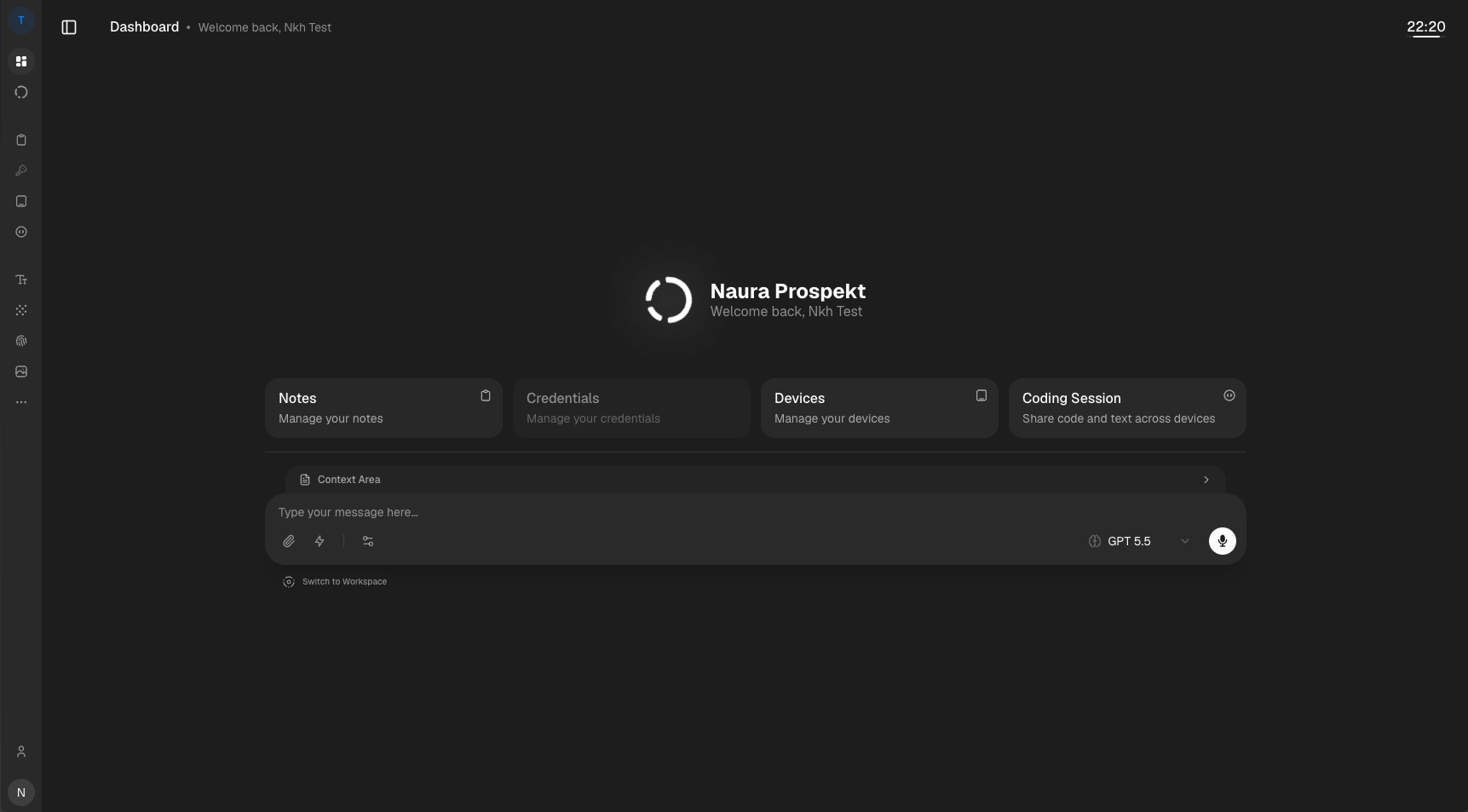
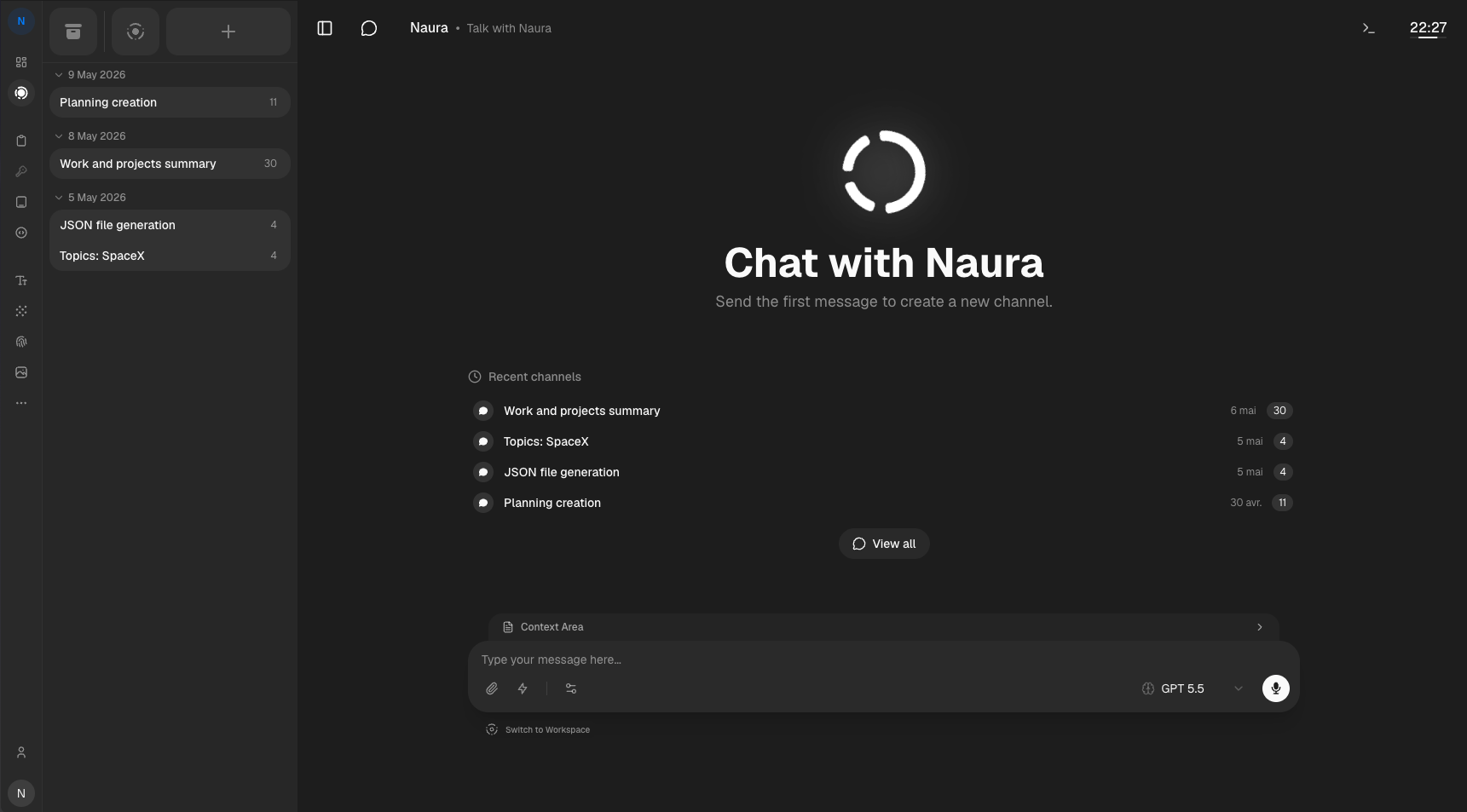
Today, Naura Prospekt includes:
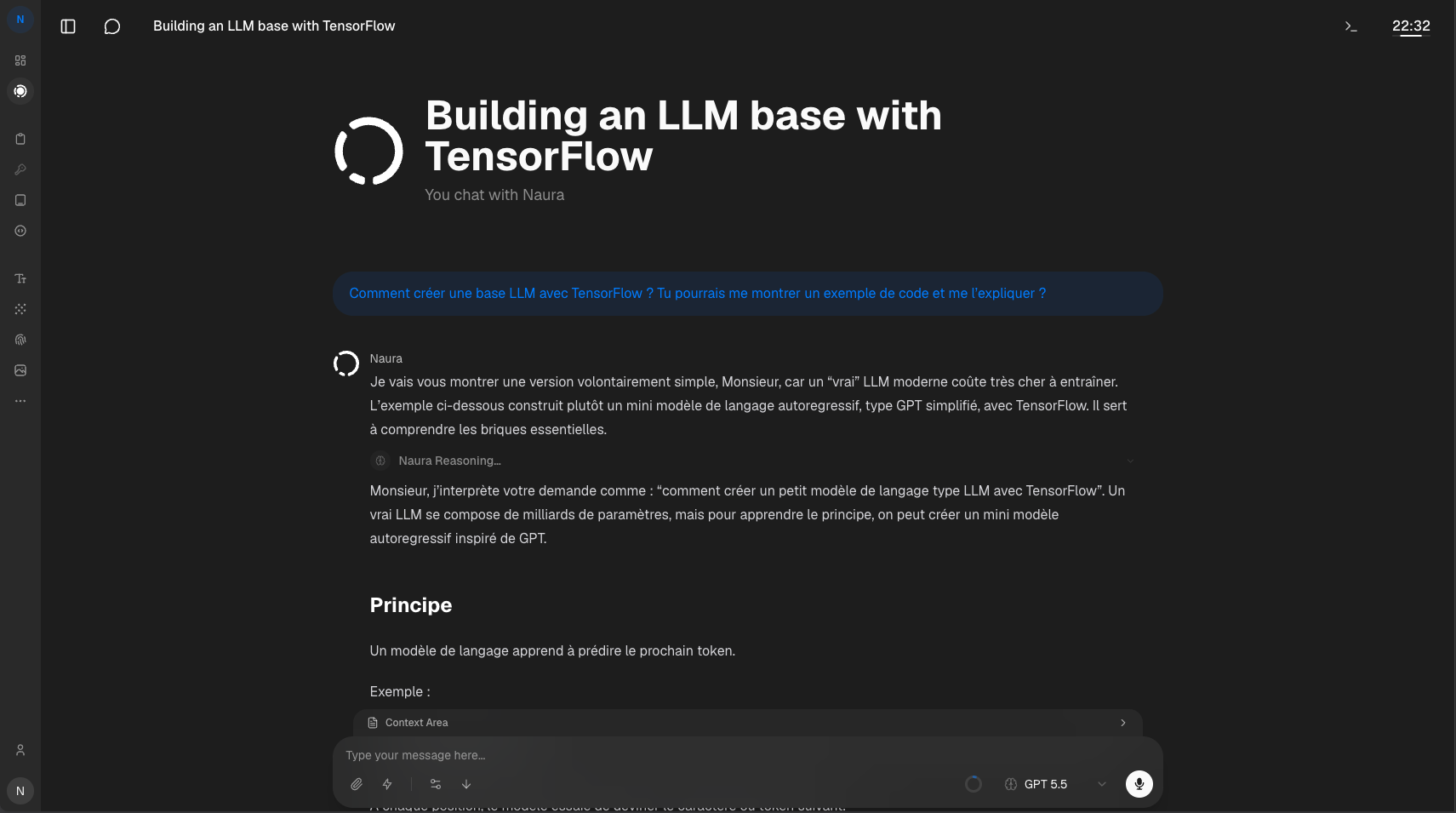
- an AI chat interface
- model and assistant settings management
- a growing set of utility tools
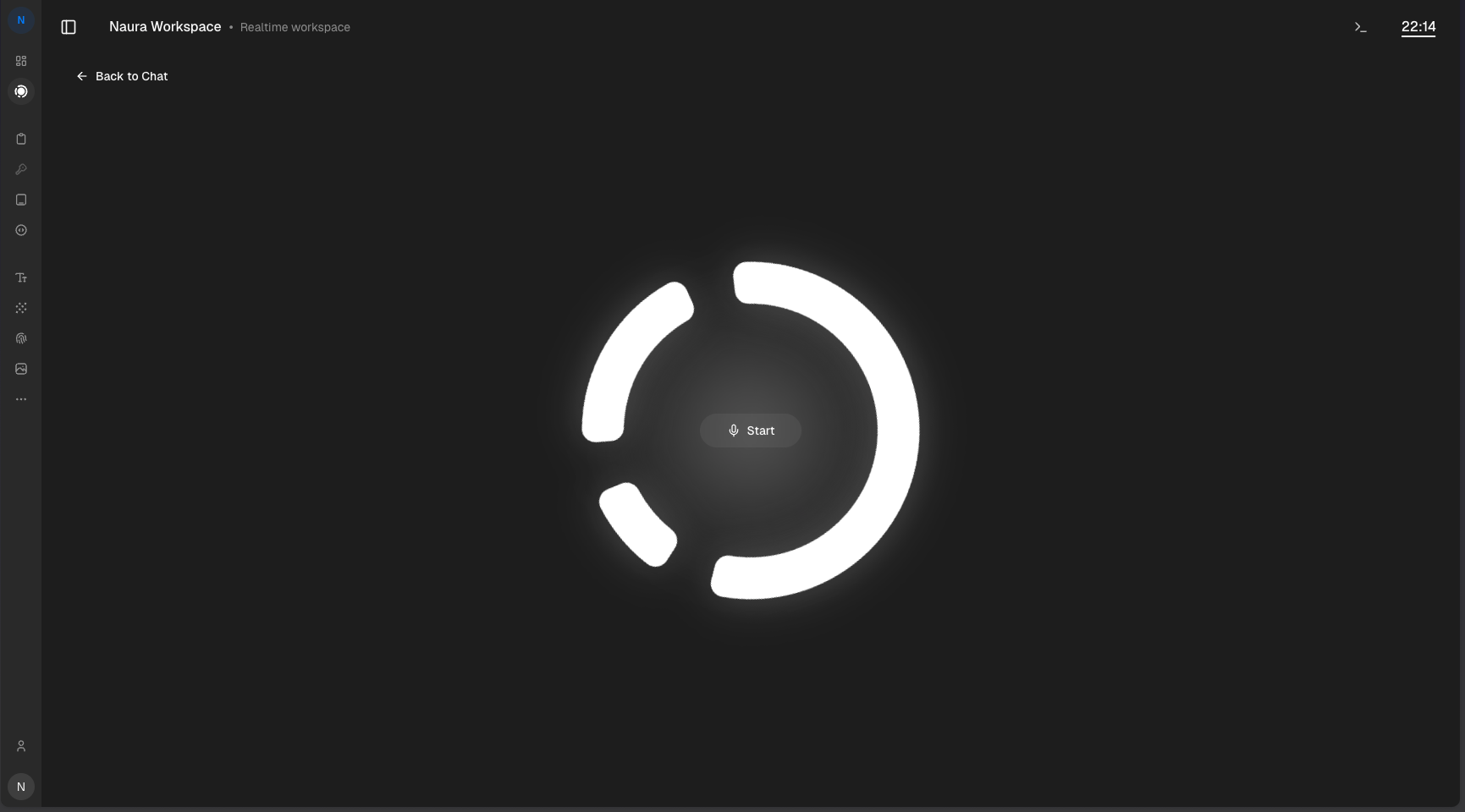
- real-time voice recording with speech-to-text
- streamed AI message rendering
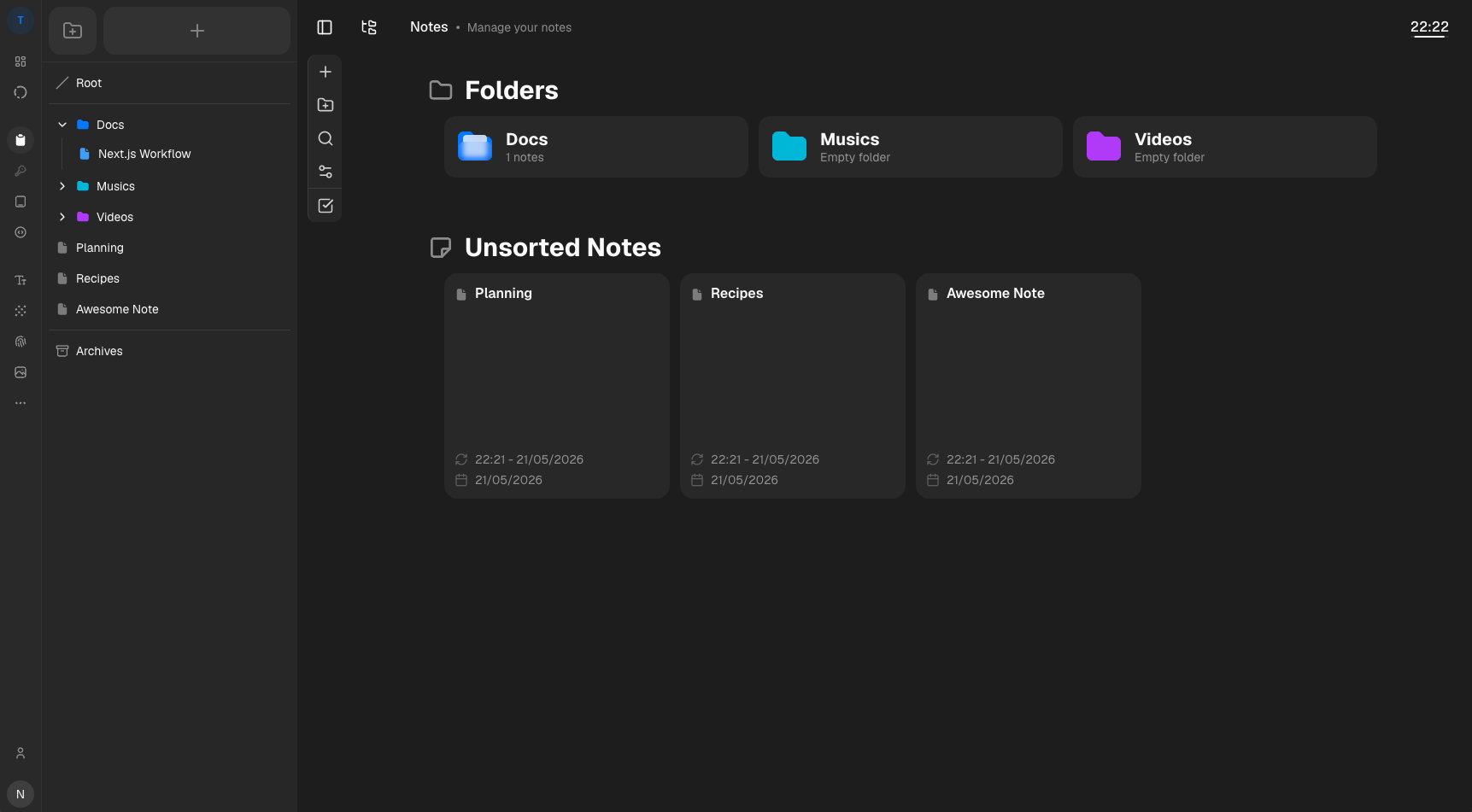
- structured note management
- recursive folders
- markdown-based editing workflows
- secure note encryption
- real-time assistant feedback through `Socket.IO`

The tools section already includes practical utilities such as:
- text translation
- token generation
- `bcrypt` helpers
- image conversion
- UID generation
- regex generation

Some of these features are powered directly by code, while others combine classic programming logic with AI assistance.

## Notes became the biggest game changer

The most impactful addition to Naura Prospekt has probably been the note system.

I wanted something more powerful than plain text storage. The goal was to build a system that felt closer to a lightweight `Notion`, while also being deeply connected to the assistant itself.

That meant building:
- recursive folders
- editable notes
- note organization and movement
- secure notes
- markdown interoperability
- AI-readable and AI-editable content

This was one of the hardest parts of the whole project.

Because I use `Yoopta Editor` for the editing experience, I needed to solve a difficult technical problem: if Naura had to read and modify notes, then I needed a reliable way to transform editor data into markdown, let the AI work with it, and then convert the result back into a structured format compatible with the editor.

To make that work, I had to implement my own backend-side adaptation layer for that editor workflow. It was verbose, documentation-heavy, and time-consuming, but it made the whole system possible.

That feature changed the platform from a chatbot into a true AI workspace.

## Architecture and stack

The current stack is built around technologies that reflect the more mature state of the product.

Frontend:
- `Next.js`
- `TypeScript`
- `Zustand`
- `Zod`
- `Tailwind CSS`
- `shadcn/ui`
- custom reusable components refined over multiple iterations

Backend:
- `Express.js`
- `Prisma`
- `TypeScript`
- `Zod`
- `Socket.IO`

AI and interaction systems:
- OpenAI models
- speech-to-text workflows
- text streaming
- real-time interface state synchronization

The architecture evolved several times, often through major rewrites, because older versions eventually became too outdated to extend cleanly.

## Technical challenges

This project has been full of technical challenges across the years.

Some of the most significant ones were:

### 1. Keeping up with changing AI APIs

The OpenAI ecosystem changed multiple times over the life of the project. This forced repeated refactors to keep the platform functional and aligned with newer APIs and interaction patterns.

### 2. Building a reliable note bridge

Making `Yoopta Editor` work with AI-driven note editing was far more difficult than expected. The conversion layer between structured editor data and markdown required a lot of custom logic.

### 3. Real-time UX improvements

I progressively introduced more real-time behavior into the chat experience:
- thinking states
- writing states
- search states
- streamed response rendering
- live speech transcription

This improved the product dramatically, but required stable real-time flows and good UI synchronization.

### 4. Autosave behavior

Another important challenge was note synchronization. I had to learn how to design a proper autosave flow using debouncing, so users could edit naturally without manually saving every change.

### 5. Rendering quality

Displaying AI output cleanly inside a chat is more complex than it looks. A lot of work went into markdown rendering, code formatting, progressive message display, and the overall readability of the conversation interface.

## Recent evolution

One of the most meaningful recent upgrades was the addition of real-time voice input.

The platform can now:
- capture spoken input live
- transcribe it progressively
- send it directly into the assistant workflow
- stream the assistant response back into the interface in real time

That changed the way I use the product daily and brought it much closer to the original assistant vision that inspired the project years ago.

## Why this project matters

Naura Prospekt is probably the most representative project in my portfolio because it tells the story of my growth as a developer.

It reflects:
- my early curiosity for programming
- my transition from scripting to full-stack development
- my long-term interest in AI products
- my product design sensibility
- my persistence through multiple rewrites and technical shifts
- my ability to turn a personal idea into a deep and evolving software ecosystem

More than a single app, it is a long-term system I keep refining as my skills improve.

## What's next

Naura Prospekt is still actively evolving.

Planned future directions include:
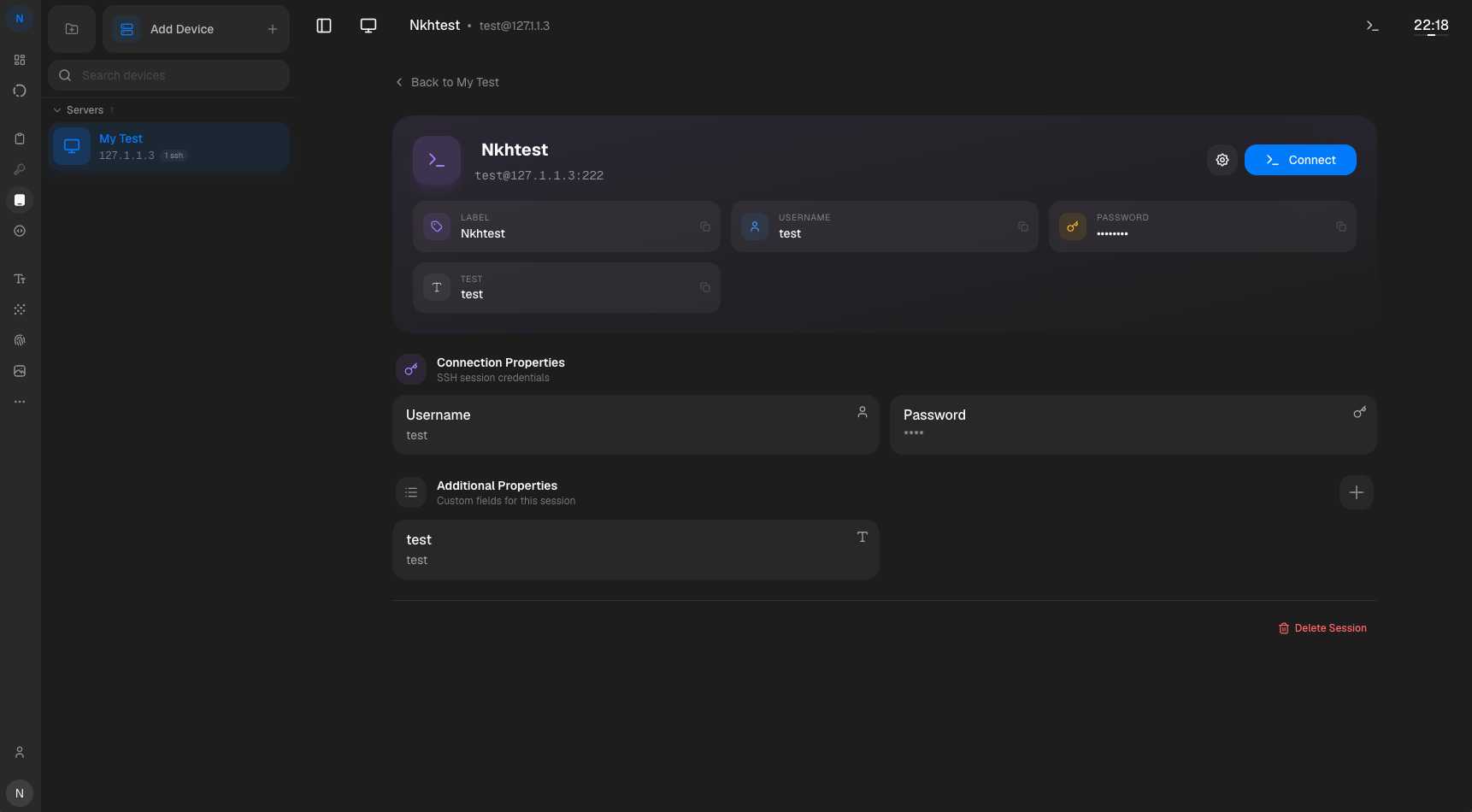
- a credential manager
- richer secure data management
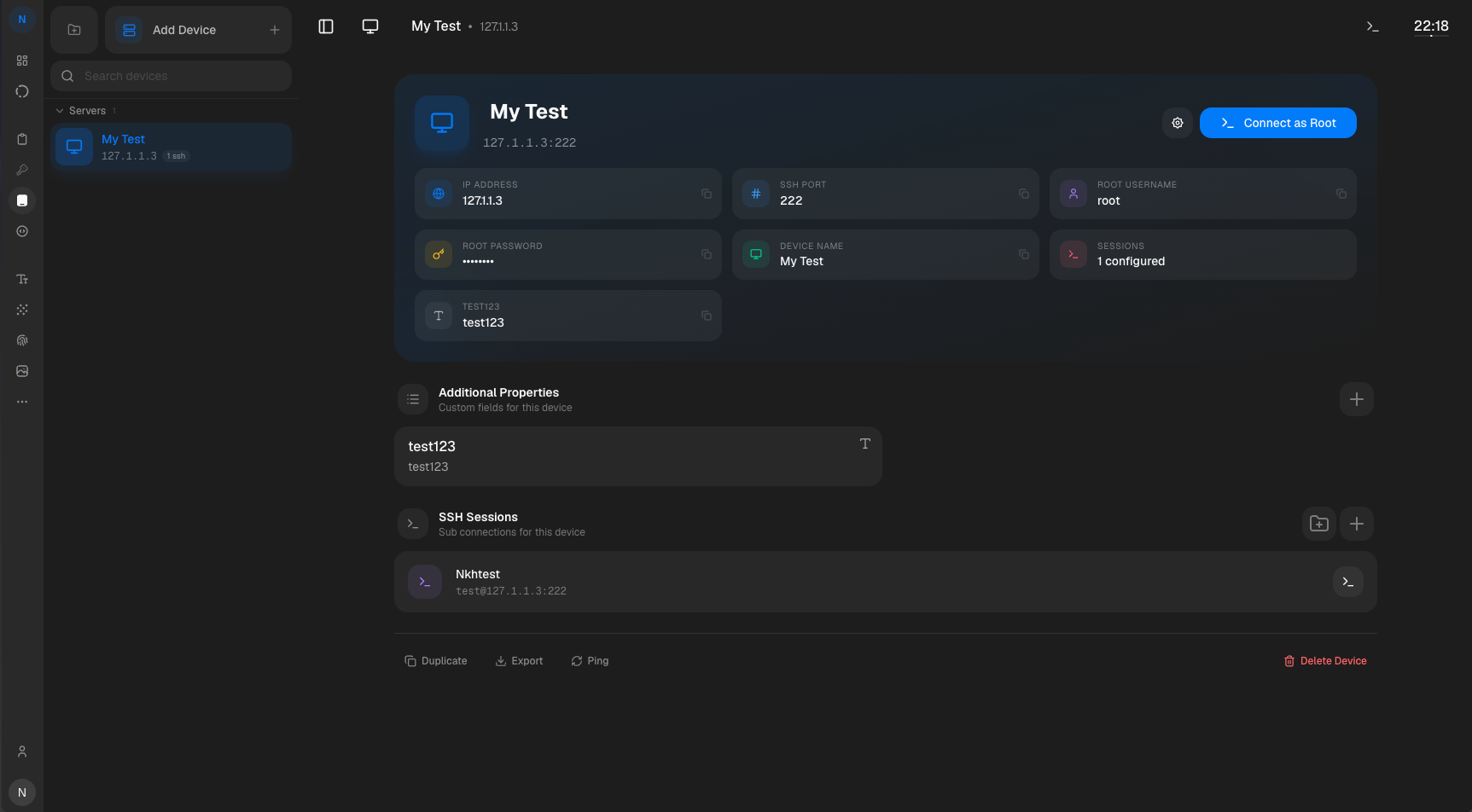
- device-oriented infrastructure management
- a real-time code and information sharing system across devices
- a built-in project manager designed specifically for development workflows
- broader file and storage features, potentially with NAS-oriented capabilities

The long-term goal is to keep turning the platform into a complete AI-assisted operating environment for daily technical work.

## Status

Naura Prospekt is an active personal project, built entirely by myself over roughly six years.

It is private, has no public repository, and currently serves as my own daily AI workspace and experimentation platform.

Gallery

Similar project: QR Dine

Naura Prospekt
April 2021Next.jsTypeScriptExpress.jsOpenAIPython

Naura Prospekt

A personal AI workspace and long-term operating environment I have been building for around six years, originally inspired by the idea of creating my own Jarvis, and progressively evolved into a full platform combining conversational AI, structured notes, real-time voice input, tools, settings, and productivity systems.

A long-term personal system

Naura Prospekt is not just a side project, it is the product I have been shaping for years to build the kind of environment I personally wanted to use every day.

It started as a very simple ambition: creating my own intelligent assistant, something inspired by the idea of a personal Jarvis. Over time, that initial concept evolved into something much broader, a full AI-powered workspace designed to centralize conversation, notes, tools, system settings, and eventually project and credential management.

What makes this project special to me is that it has grown alongside my own journey as a developer. Every major phase of my learning, from Python scripting to full-stack web architecture, from real-time systems to interface design, has been reflected inside Naura Prospekt.

Where it started

Before development really became a passion, programming felt both fascinating and intimidating to me. I was interested in what software could do, but it still felt too complex to fully commit to.

A major turning point came through a Python course, where I slowly built enough confidence to keep going, even if the learning process was difficult at first. I had long periods of stopping and restarting, but one part of that course changed everything for me: networking.

When I reached the sections about sockets, DNS, and low-level communication, I finally found the part of programming that truly clicked for me. I spent time reading documentation, understanding how these systems worked, and even adapting older learning material written for Python 2 into Python 3.

That was the moment where programming stopped feeling abstract and started feeling exciting.

The first idea

Around 2020, I started seriously thinking about building my own assistant.

At first, the concept was very simple:

  • voice detection
  • text-to-speech
  • keyword-based command triggering
  • opening applications or games
  • basic desktop automation

This early version was not yet powered by modern generative AI. It was more of a command-based assistant, built from the desire to create a personal intelligent environment.

The original assistant was called Naura, and the larger ecosystem that started forming around it eventually became Naura Prospekt.

The turning point, discovering generative AI

Later, I discovered early uses of generative AI through online technical content, which led me to experiment with OpenAI models.

This was the moment where the vision changed completely.

Instead of building only a command-based assistant, I realized I could combine:

  • my growing interest in AI
  • my web development skills
  • my original assistant idea

That combination led to the first real conversational version of Naura Prospekt, an AI chatbot interface I began building before this type of product became mainstream.

The earliest versions were still rough:

  • built in React
  • written in plain JavaScript
  • visually ambitious but technically imperfect
  • heavily inspired by futuristic UI ideas
  • difficult to maintain over time

Still, they established the product direction.

From assistant to full workspace

As I kept learning and working on client projects, Naura Prospekt became my personal testing ground and long-term product lab.

Every new concept I learned eventually made its way into the platform:

  • better frontend architecture
  • stronger typing
  • backend restructuring
  • real-time feedback systems
  • richer markdown rendering
  • reusable components
  • more mature UI decisions
  • better product thinking overall

Over time, the application stopped being just a chatbot and became something closer to a personal operating environment.

One of the biggest product decisions was merging several older tools and admin interfaces into one single workspace. Instead of having separate systems for assistant configuration, settings, notes, and utility tools, I unified them inside Naura Prospekt.

That shift transformed it into my main personal productivity platform.

What Naura Prospekt is today

The current version is the most complete one so far.

Today, Naura Prospekt includes:

  • an AI chat interface
  • model and assistant settings management
  • a growing set of utility tools
  • real-time voice recording with speech-to-text
  • streamed AI message rendering
  • structured note management
  • recursive folders
  • markdown-based editing workflows
  • secure note encryption
  • real-time assistant feedback through Socket.IO

The tools section already includes practical utilities such as:

  • text translation
  • token generation
  • bcrypt helpers
  • image conversion
  • UID generation
  • regex generation

Some of these features are powered directly by code, while others combine classic programming logic with AI assistance.

Notes became the biggest game changer

The most impactful addition to Naura Prospekt has probably been the note system.

I wanted something more powerful than plain text storage. The goal was to build a system that felt closer to a lightweight Notion, while also being deeply connected to the assistant itself.

That meant building:

  • recursive folders
  • editable notes
  • note organization and movement
  • secure notes
  • markdown interoperability
  • AI-readable and AI-editable content

This was one of the hardest parts of the whole project.

Because I use Yoopta Editor for the editing experience, I needed to solve a difficult technical problem: if Naura had to read and modify notes, then I needed a reliable way to transform editor data into markdown, let the AI work with it, and then convert the result back into a structured format compatible with the editor.

To make that work, I had to implement my own backend-side adaptation layer for that editor workflow. It was verbose, documentation-heavy, and time-consuming, but it made the whole system possible.

That feature changed the platform from a chatbot into a true AI workspace.

Architecture and stack

The current stack is built around technologies that reflect the more mature state of the product.

Frontend:

  • Next.js
  • TypeScript
  • Zustand
  • Zod
  • Tailwind CSS
  • shadcn/ui
  • custom reusable components refined over multiple iterations

Backend:

  • Express.js
  • Prisma
  • TypeScript
  • Zod
  • Socket.IO

AI and interaction systems:

  • OpenAI models
  • speech-to-text workflows
  • text streaming
  • real-time interface state synchronization

The architecture evolved several times, often through major rewrites, because older versions eventually became too outdated to extend cleanly.

Technical challenges

This project has been full of technical challenges across the years.

Some of the most significant ones were:

1. Keeping up with changing AI APIs

The OpenAI ecosystem changed multiple times over the life of the project. This forced repeated refactors to keep the platform functional and aligned with newer APIs and interaction patterns.

2. Building a reliable note bridge

Making Yoopta Editor work with AI-driven note editing was far more difficult than expected. The conversion layer between structured editor data and markdown required a lot of custom logic.

3. Real-time UX improvements

I progressively introduced more real-time behavior into the chat experience:

  • thinking states
  • writing states
  • search states
  • streamed response rendering
  • live speech transcription

This improved the product dramatically, but required stable real-time flows and good UI synchronization.

4. Autosave behavior

Another important challenge was note synchronization. I had to learn how to design a proper autosave flow using debouncing, so users could edit naturally without manually saving every change.

5. Rendering quality

Displaying AI output cleanly inside a chat is more complex than it looks. A lot of work went into markdown rendering, code formatting, progressive message display, and the overall readability of the conversation interface.

Recent evolution

One of the most meaningful recent upgrades was the addition of real-time voice input.

The platform can now:

  • capture spoken input live
  • transcribe it progressively
  • send it directly into the assistant workflow
  • stream the assistant response back into the interface in real time

That changed the way I use the product daily and brought it much closer to the original assistant vision that inspired the project years ago.

Why this project matters

Naura Prospekt is probably the most representative project in my portfolio because it tells the story of my growth as a developer.

It reflects:

  • my early curiosity for programming
  • my transition from scripting to full-stack development
  • my long-term interest in AI products
  • my product design sensibility
  • my persistence through multiple rewrites and technical shifts
  • my ability to turn a personal idea into a deep and evolving software ecosystem

More than a single app, it is a long-term system I keep refining as my skills improve.

What's next

Naura Prospekt is still actively evolving.

Planned future directions include:

  • a credential manager
  • richer secure data management
  • device-oriented infrastructure management
  • a real-time code and information sharing system across devices
  • a built-in project manager designed specifically for development workflows
  • broader file and storage features, potentially with NAS-oriented capabilities

The long-term goal is to keep turning the platform into a complete AI-assisted operating environment for daily technical work.

Status

Naura Prospekt is an active personal project, built entirely by myself over roughly six years.

It is private, has no public repository, and currently serves as my own daily AI workspace and experimentation platform.

Gallery

Naura Prospekt screenshot 1
Naura Prospekt screenshot 2
Naura Prospekt screenshot 3
Naura Prospekt screenshot 4
Naura Prospekt screenshot 5
Naura Prospekt screenshot 6
Naura Prospekt screenshot 7

Naikho © 2026